
Lifting Height and Distance Converter
Plan Lifts with Better Geometry
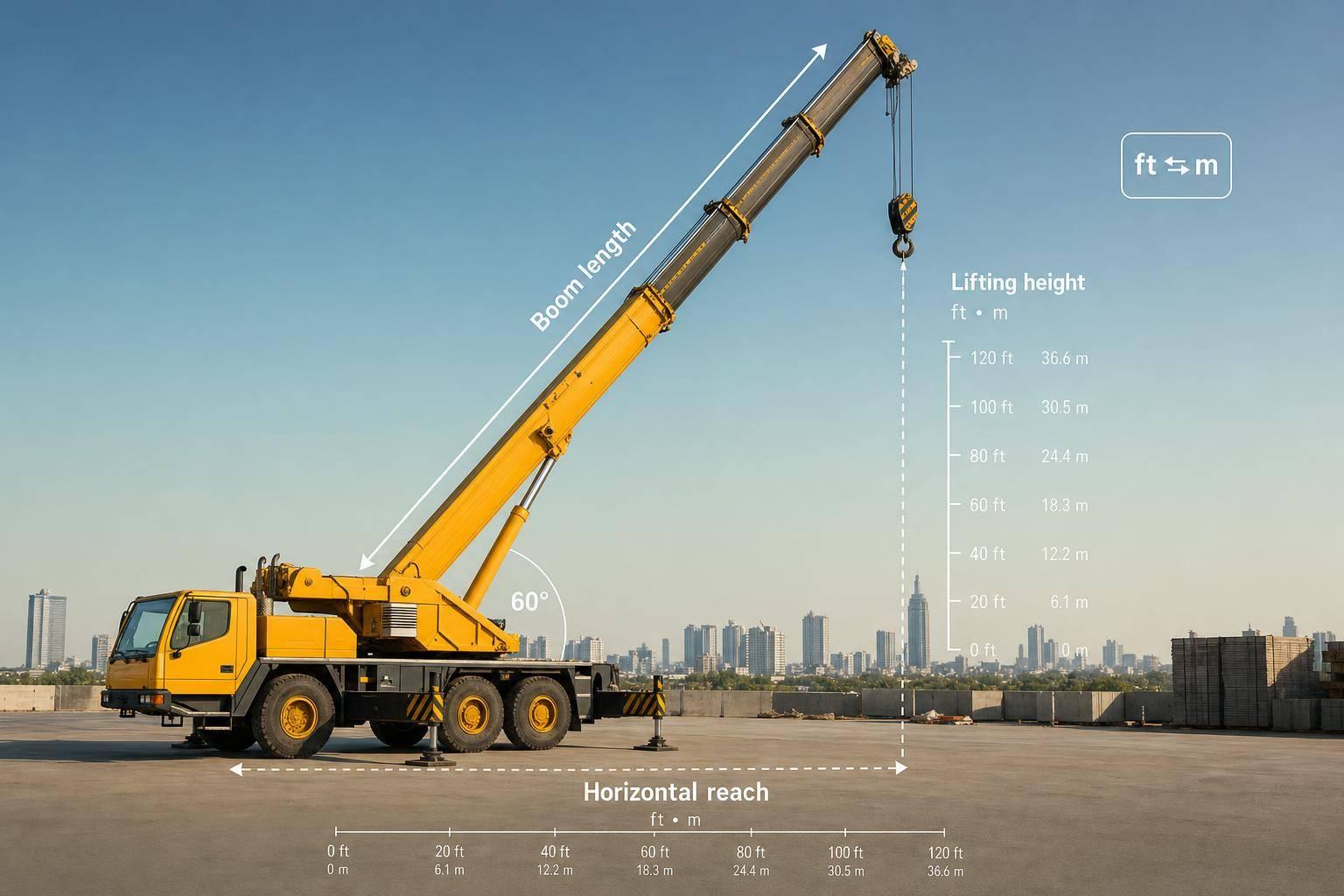
A reliable crane lift height and distance converter helps crews quickly estimate how high and how far a boom can place a load based on boom length and angle. For crane operators and riggers, that simple view of lift geometry can make pre-lift planning faster and easier, especially when checking clearance, radius, or expected hook position before moving equipment into place.
Fast Height and Reach Estimates
This tool uses straightforward trigonometric calculations to show theoretical vertical height and horizontal reach. Enter the boom length, set the boom angle, and the converter returns labeled results in either metric or imperial units. If needed, you can also include an additional load height to better reflect the working lift point.
Useful for Operators and Riggers
A practical crane reach calculator is helpful when comparing setup options, checking whether a lift path is realistic, or explaining boom geometry to newer crew members. The built-in unit toggle keeps measurements consistent, and a simple diagram note can help users understand how angle, height, and distance relate. While this lifting height calculator is useful for planning, final lift decisions should always be verified against crane specifications and manufacturer load charts.
FAQs
How does this crane height and reach calculator work?
The calculator uses basic trigonometry to estimate the boom tip position. Vertical lifting height is found by multiplying boom length by the sine of the boom angle, while horizontal reach is found by multiplying boom length by the cosine of the same angle. If you enter an additional load or starting height, that value can be added to the vertical result for a more practical total height estimate.
Are these results accurate enough for real lift planning?
They’re useful for planning and visualization, but they’re still theoretical. Real-world crane performance depends on the crane model, boom configuration, load chart, ground conditions, outrigger setup, deflection, attachments, and site-specific constraints. Always confirm final lift capacity, operating radius, and allowable boom angles using the manufacturer’s load chart and your lift plan.
Should I use metric or imperial units?
Use whichever unit system matches your jobsite documents, crane chart, or team preference. The tool is designed to switch between metric and imperial so you can work in feet or meters without doing manual conversions. The most important thing is to stay consistent with units across boom length, load height, site measurements, and crane documentation.
Related Articles
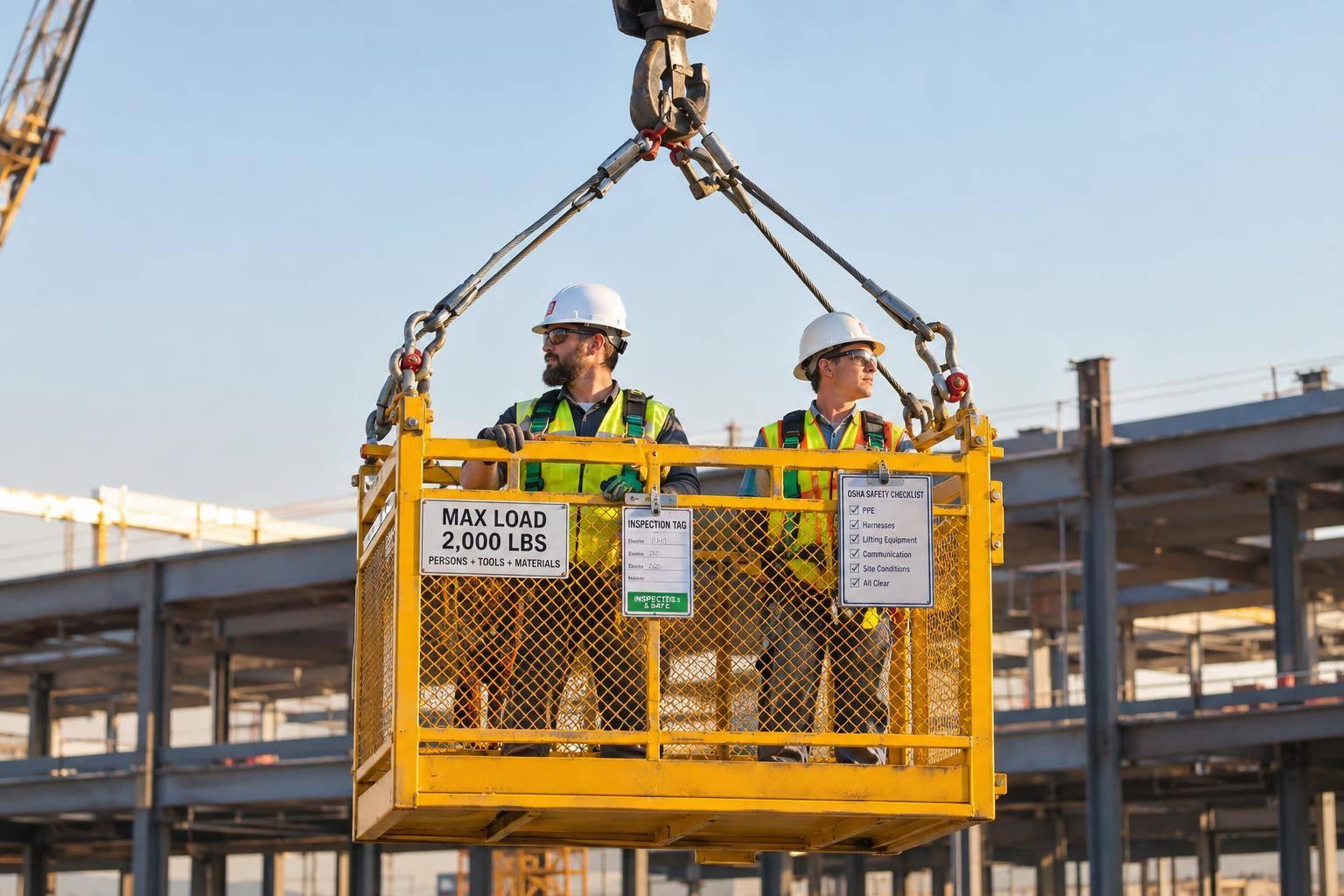
Man Basket Safety Standards: OSHA Guidelines
OSHA checklist for crane-hoisted man baskets: design, proof tests, trial lifts, fall protection, training, and rescue plans.
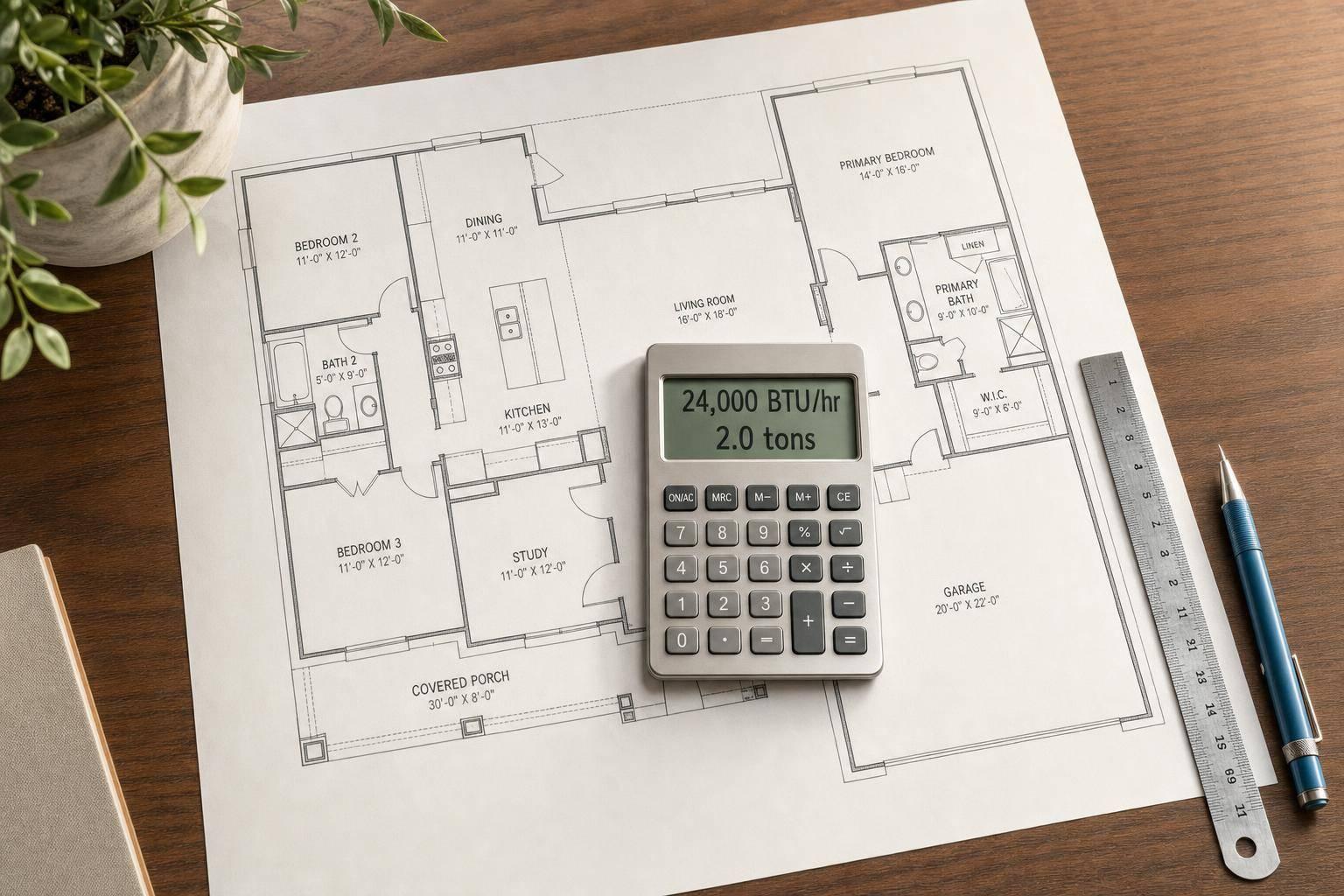
HVAC Tonnage Calculator
Estimate AC size in BTU/hr and tons using area, climate, insulation, and more—then compare your result with practical unit size ranges.

Crane vs Boom Truck for HVAC Lifting
Compare boom trucks vs mobile cranes for rooftop HVAC lifts—weight, height, working radius, site access, permits, and true job cost.