
OSHA Ladder Inspection Checklist
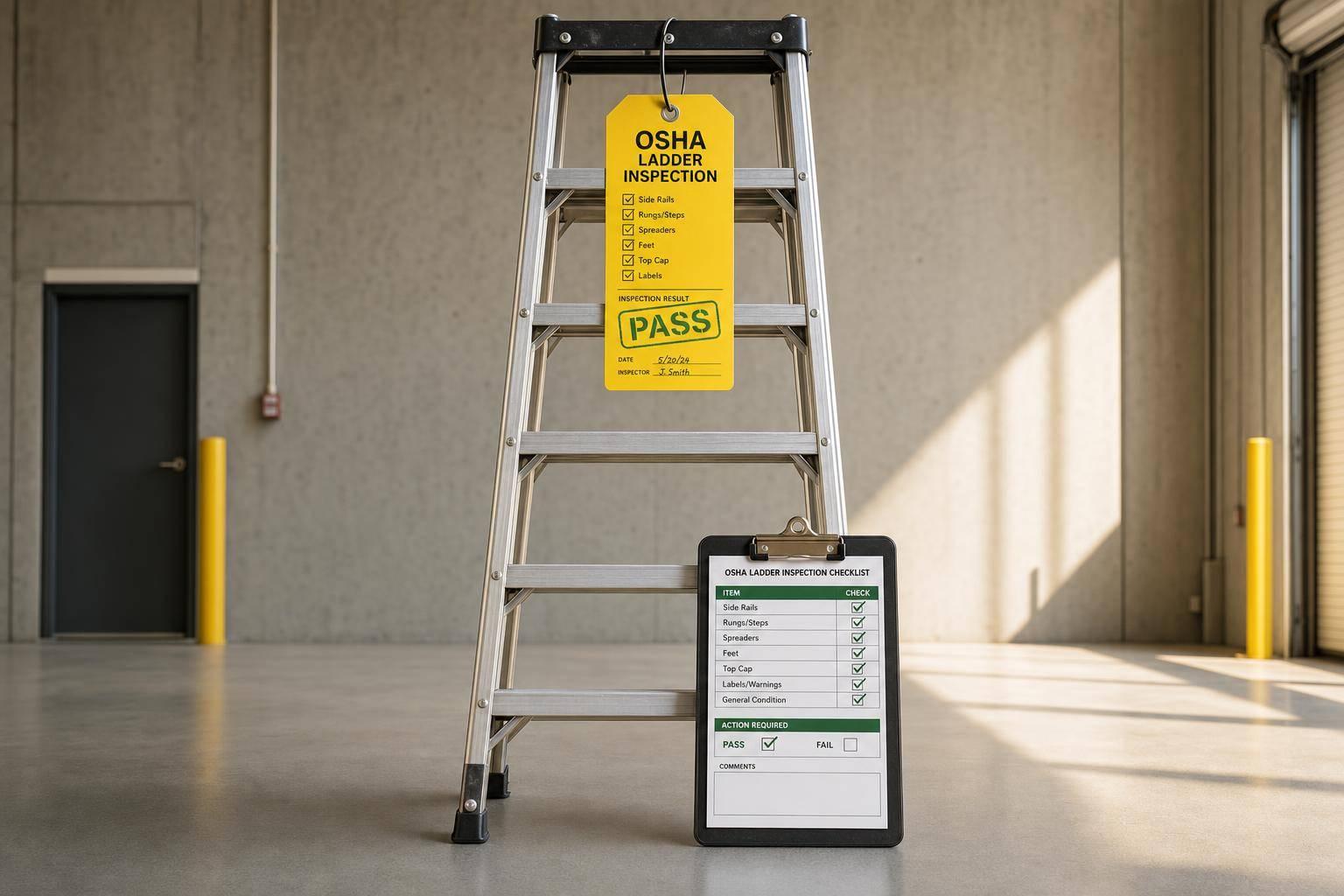
OSHA Ladder Inspection Checklist for Safer Pre-Use Reviews
A reliable OSHA ladder inspection checklist helps crews catch visible defects before a ladder ever leaves the truck or gets set in place. Whether you're checking a step ladder, extension ladder, platform ladder, or fixed access ladder, the goal is the same: find damage early, document it clearly, and keep unsafe equipment out of service.
Built for Real Jobsite Conditions
This web-based checklist is designed for field use on mobile or desktop. Users can enter ladder details, note the job site and conditions, and work through simple Pass, Fail, or N/A inspection items. The tool then totals applicable items, flags failed points, and creates a clear corrective action list based on the inspector’s notes.
Clear Results Without the Guesswork
The OSHA ladder inspection checklist also helps teams separate minor issues from serious hazards. Critical failures like damaged rails, missing rungs, faulty feet, broken locks, or major corrosion trigger a Do Not Use result. If the ladder needs fixes but doesn’t show a critical defect, the tool marks it for correction before use. That makes ladder safety inspections easier to standardize across crews while still supporting sound judgment in the field.
This tool supports inspections and documentation, but it does not replace OSHA standards, manufacturer guidance, or competent person review.
FAQs
How does the tool decide between Pass, Needs Correction Before Use, and Do Not Use?
The tool reviews only the applicable checklist items and ignores anything marked N/A. If a critical safety item fails, such as damaged side rails, loose or missing rungs, defective feet, broken locks or spreaders, major corrosion, or another structural defect, the overall result becomes Do Not Use. If there are no critical failures but one or more other items fail, the result is Needs Correction Before Use. If all applicable items pass, the ladder is marked Pass.
Can this checklist be used for different ladder types?
Yes. It’s built for step ladders, extension ladders, straight ladders, platform ladders, and fixed ladders, with room for other ladder types as well. The checklist covers shared inspection points like labels, rails, rungs, feet, and hardware, then adds fixed-ladder items when that type is selected. That keeps the inspection relevant without forcing users through items that don’t apply.
Does this replace OSHA requirements or a competent person’s judgment?
No. This tool supports a structured inspection process, but it doesn’t replace OSHA standards, manufacturer instructions, site-specific safety rules, or the judgment of a competent person. It’s best used as a practical field aid to improve consistency, document visible issues, and prompt corrective action before a ladder is used.
Related Articles

Man Basket Safety Standards: OSHA Guidelines
OSHA checklist for crane-hoisted man baskets: design, proof tests, trial lifts, fall protection, training, and rescue plans.

HVAC Tonnage Calculator
Estimate AC size in BTU/hr and tons using area, climate, insulation, and more—then compare your result with practical unit size ranges.

Crane vs Boom Truck for HVAC Lifting
Compare boom trucks vs mobile cranes for rooftop HVAC lifts—weight, height, working radius, site access, permits, and true job cost.