
OSHA Rules for Crane Equipment Storage
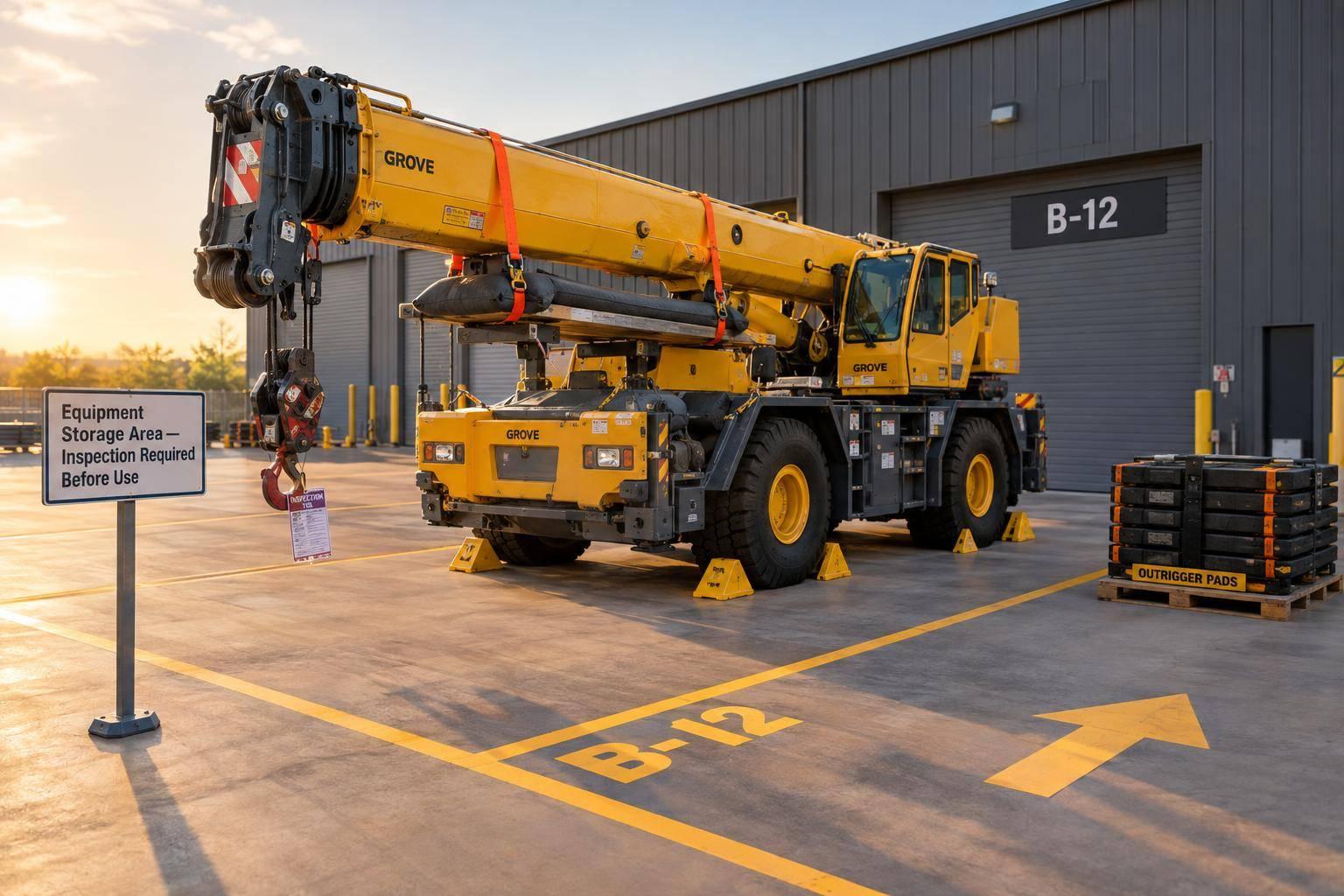
OSHA has no single rule for crane equipment storage. I start by matching the equipment and work to the applicable OSHA standards, then follow the manufacturer’s storage instructions.
My storage checklist covers four steps:
- Before storage: Check ground support, secure the crane and components, and keep access clear.
- During storage: Protect rigging and parts from damage, check supports and restraints, and separate defective items.
- Before removal: Confirm weights, lifting points, travel routes, and who handles pickup.
- Before use: Complete required inspections, resolve defects, and keep required records.
One deadline matters: construction cranes out of service for 3 months or more need a qualified-person inspection meeting monthly-inspection requirements before reuse. Storage is not clearance to operate - and <u>using an offsite storage provider does not remove the employer’s OSHA duties</u>.

Crane Equipment Storage: 4-Stage Safety Checklist
Prepare the Storage Area and Secure Equipment
Ground Support, Access, and Weather
Once you’ve identified the applicable standard, prepare the storage area before parking the crane.
Choose firm, drained ground that meets the manufacturer’s support and leveling requirements. Check bearing capacity, slope, pavement, voids, utilities, and point loads before storage. If support is uncertain, get site data and guidance from an engineer or the manufacturer. Use engineered mats or blocking, separate traffic from stored equipment, and keep aisles and emergency access clear. Assess overhead electrical hazards before placement or movement.
Recheck supports after snowmelt, flooding, or freeze-thaw cycles to help prevent support failure and corrosion. Keep components above standing water, use breathable covers, and protect equipment from salt and deicing chemicals. Follow the manufacturer’s instructions for snow removal and freshwater rinsing when appropriate. On tight urban sites, plan laydown zones, use engineered racks, and put the retrieval sequence in writing.
Crane Shutdown and Component Support
With the storage area ready, place the crane in its out-of-service configuration so it stays secure until inspection and return to service. Follow the manufacturer’s shutdown checklist and document the final configuration. Apply equipment-specific wind precautions. Tower cranes need their prescribed out-of-service slew, trolley, hook, and storm arrangements.
Place detached booms, jibs, counterweights, and other components on stable, load-rated stands or blocking at designated support points. Secure each component against rolling, sliding, tipping, or collapse. Set stack limits, and keep access and lifting points clear.
Do not use hooks, slings, or hydraulic cylinders as long-term supports. Follow the manufacturer’s stand and tie-down requirements.
Protect Rigging, Personnel Platforms, and Components
Separate stored components by condition and use. Quarantine rejected rigging in a labeled area, apart from usable rigging. Protect wire rope from kinks and crushing. Keep synthetic slings dry and shielded from ultraviolet exposure and chemicals, and keep chains and hardware visible and separate.
Store fixed and suspended personnel platforms on stable supports that protect gates, rails, floors, and attachment points from impact and distortion. Secure suspended platforms against swinging. Protect hoses from sharp bends and abrasion, and shield electrical parts from moisture, salt, and rodents.
Storage does not make a personnel platform ready for use. OSHA requirements, manufacturer limits, inspections, and site controls still apply.
sbb-itb-798c36f
Inspect Equipment Before Return to Service
Inspection Timing and Damage Checks
Inspect equipment before putting it back to work. Start with a baseline check before storage, monitor it when storage conditions change, and inspect it again before return to service. Under 29 CFR 1926.1412, construction cranes out of service for 3 months or more must receive an inspection by a qualified person that meets monthly-inspection requirements before reuse. Storage does not reset shift, monthly, annual, or post-repair inspection requirements.
Check the crane and rigging for damage that storage may have hidden. Look for corrosion, pitting, cracks, deformation, loose or missing bolts and pins, leaks, damaged hydraulic or pressurized lines, and faulty controls. Inspect wire rope from end to end for crushing, kinking, birdcaging, unstranding, corrosion, and diameter loss.
Before use each shift, inspect rigging for cuts, abrasion, chemical or heat damage, broken stitching, distorted fittings, and illegible ID and capacity markings. Follow manufacturer and OSHA acceptance criteria - not appearance alone.
Isolate Defects and Approve Reuse
An inspection does not make a defect safe to use. Remove defective rigging from service. If a crane defect could create a hazard, remove the crane or affected function from service. Tag and isolate the defect, repair or replace it, and complete any required reinspection before release. Personnel qualified under the applicable OSHA rule and manufacturer instructions must make these decisions.
After severe weather, flooding, impact, or movement without permission, perform and document a condition assessment. Continue to follow any applicable severe-service inspection requirements.
Inspection and Maintenance Records
After inspection and repair, document what was checked and the basis for clearing the equipment for reuse. Monthly inspection records must include the items checked, results, inspector name and signature, and inspection date. Keep monthly records for at least 3 months and annual inspection records with the same core details for at least 12 months.
Optional storage logs can track equipment ID, storage date, condition, corrective action, inspector, and release date. These logs supplement required records; they do not replace them. Before release, verify that manuals are accessible and legible, and that capacity markings and warning labels are legible.
OSHA - 1926.250 - General Requirement for Storage
4-Stage Storage Compliance Checklist
Use this checklist to put storage and inspection rules into practice on site. It supplements OSHA rules, manufacturer instructions, and the site hazard assessment. Apply it to complete cranes, separate components, rigging, and personnel platforms.
Before and During Storage
- Before storage: Check that the ground is firm and drained and that supports are load-rated. List each item, its capacity, location, and service status. Control access, keep travel and emergency routes clear, and separate defective items from usable inventory.
- During storage: Check drainage, covers, blocking, restraints, corrosion, security, rigging protection, and marking legibility. Keep rigging off the ground, and make sure covers don’t trap moisture. Set check intervals based on exposure, storage duration, and equipment needs. Follow company procedures for frequency unless OSHA or the manufacturer requires otherwise.
Before Removal and Operation
Before removal: Confirm weights, lifting points, handling methods, route width, ground capacity, overhead clearance, power-line hazards, and pedestrian access. Assign qualified personnel.
Before operation: Complete all required inspections and repair checks. Keep equipment out of service if defects remain unresolved. Record its release when company procedures require it. A storage label is not clearance to operate.
For offsite storage, assign responsibility for checks, damage reporting, repairs, and release before delivery.
Coordinate Storage With L&M Crane
L&M Crane provides indoor and outdoor storage for crane and rigging projects in Long Island, the five boroughs, greater New York, and New Jersey.
Before delivery, confirm site suitability, support points, weather protection, access hours, and receiving procedures. Also confirm who handles inspections, damage reporting, repair authorization, and release approval, plus which records must accompany pickup. Outsourced storage does not guarantee OSHA compliance; the employer and responsible parties must still meet applicable requirements.
Conclusion: Store Safely and Inspect Before Reuse
Follow the applicable OSHA rule and the manufacturer’s manual when storing equipment. Keep it stable, protect rigging, and isolate defective equipment until it’s repaired or replaced.
Before reuse, check how long the equipment has been out of service. Construction cranes idle for 3 months or more must undergo an inspection by a qualified person before initial use. Complete all other required pre-use inspections, too.
Assign someone to handle storage checks, and keep required inspection and maintenance records. Return to service requires clearance - not just a date on the calendar. Before pickup, confirm the handling arrangements and who has authority to release the equipment.
FAQs
Which OSHA standards apply to my stored crane?
OSHA standards vary by equipment type: 29 CFR 1926.1412 applies to mobile construction cranes, while 29 CFR 1910.179 applies to overhead and gantry cranes. Subpart CC of 29 CFR 1926 covers crane operations and steps to reduce hazards.
All equipment - including rigging, man baskets, and lifting gear - requires documented testing and regular inspections. L&M Crane offers secure indoor and outdoor storage to help keep equipment maintained and compliant.
Who qualifies to inspect my crane after storage?
A qualified person must inspect your crane after storage before it returns to service. A routine shift check isn’t enough. That person must show they can solve equipment-related problems through a recognized degree, certificate, professional standing, or extensive knowledge, training, and experience.
At L&M Crane, our highly trained team holds the required certifications to help ensure your equipment is safe, compliant, and ready to use.
How should I divide safety duties with a storage provider?
Put each safety duty in writing, including who’s responsible for it. OSHA requires employers to keep detailed, accessible records of inspections, testing, and certifications. Make sure your provider completes and documents required daily equipment inspections and keeps all required licenses and certifications current.
Using one provider for equipment handling, maintenance, and storage can simplify logistics and safety oversight. It can also help you maintain compliance from initial storage through final installation.
Related Blog Posts
Related Articles
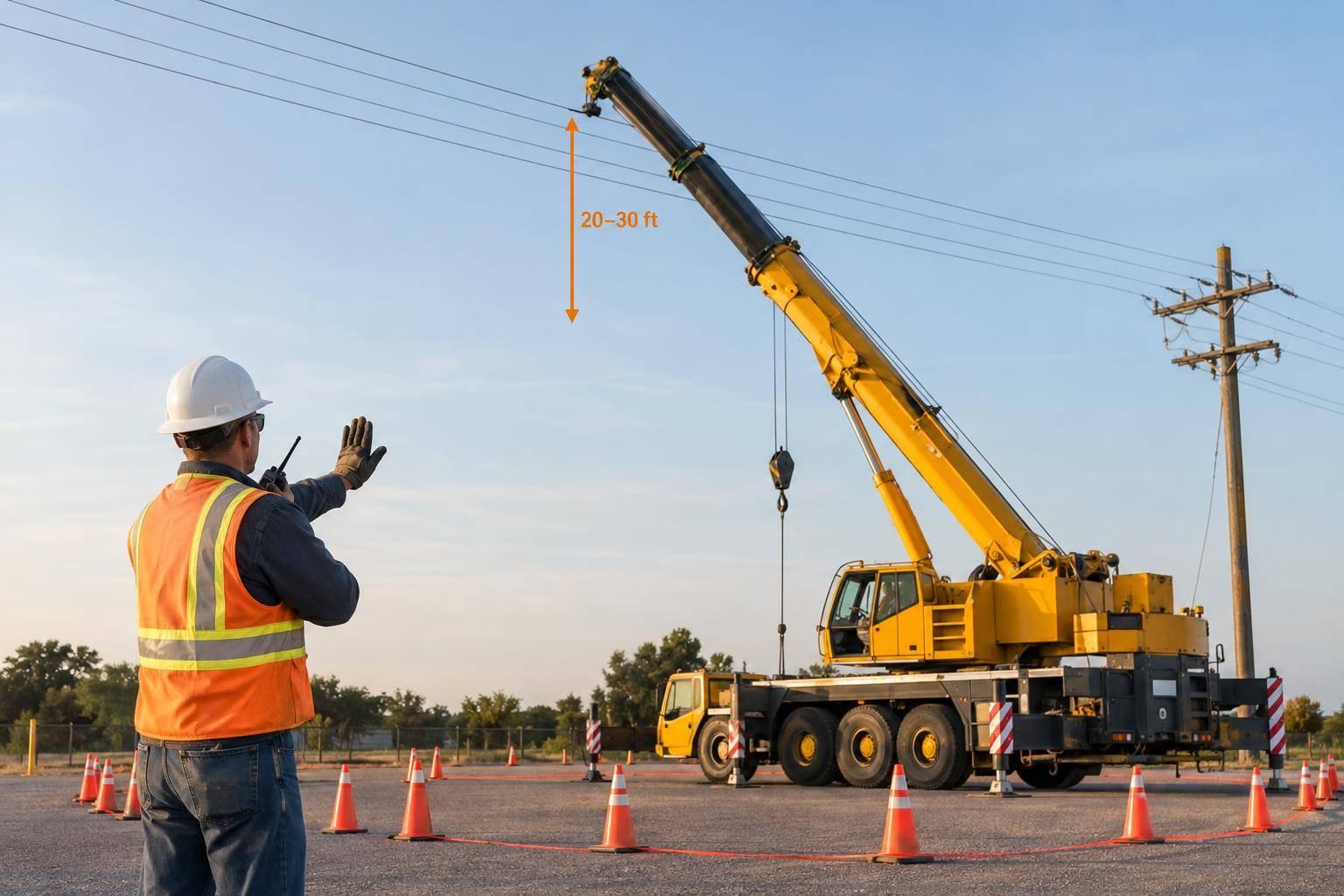
OSHA Guidelines for Overhead Clearance in Crane Operations
OSHA rules for crane work near power lines: when to keep 20-50 ft clearance, required controls, spotter duties, and pre-lift checks.
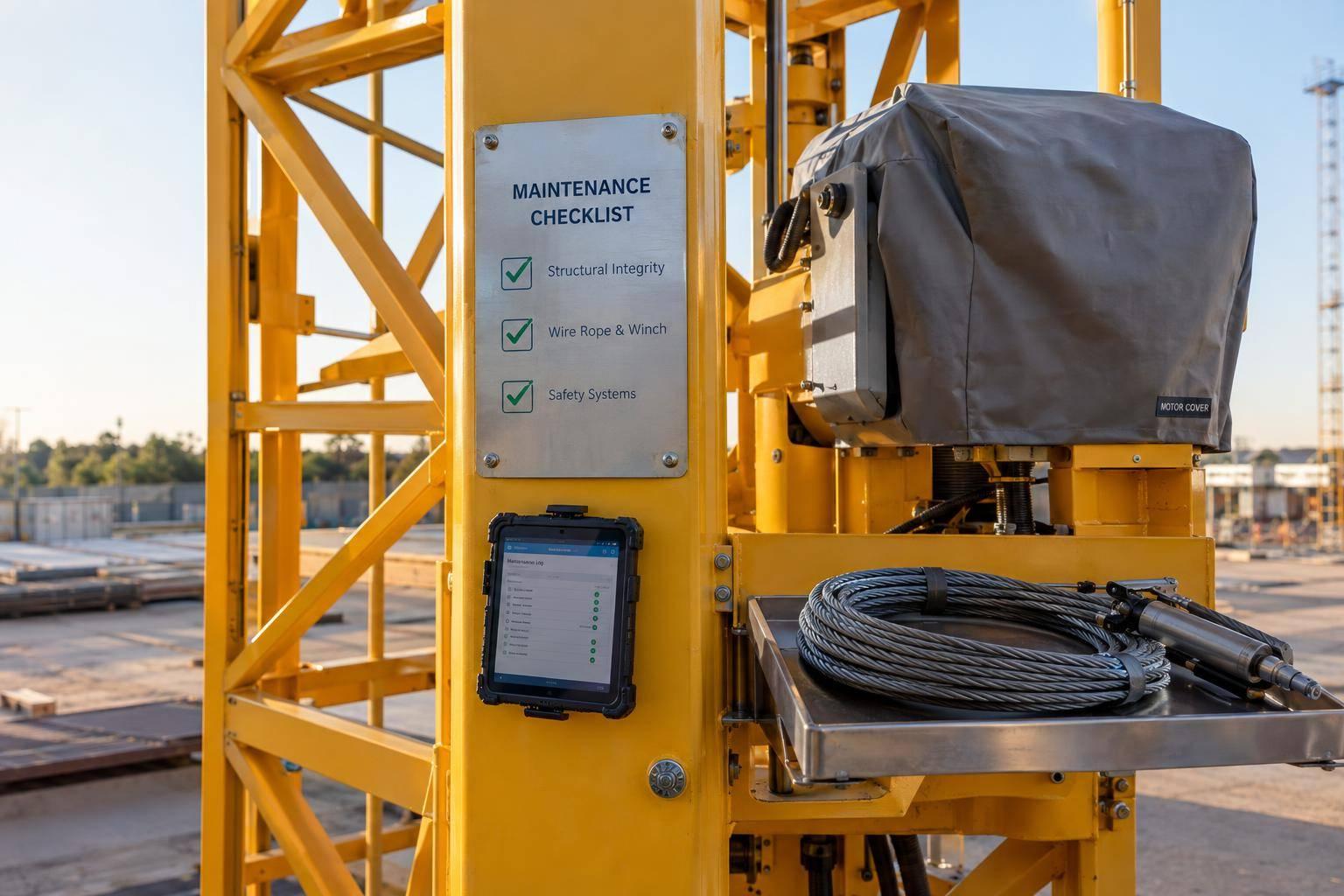
Checklist for Cost-Effective Crane Maintenance
Daily and scheduled inspections, lubrication, weather protection, and recordkeeping to reduce crane repairs, downtime, and maintenance costs.
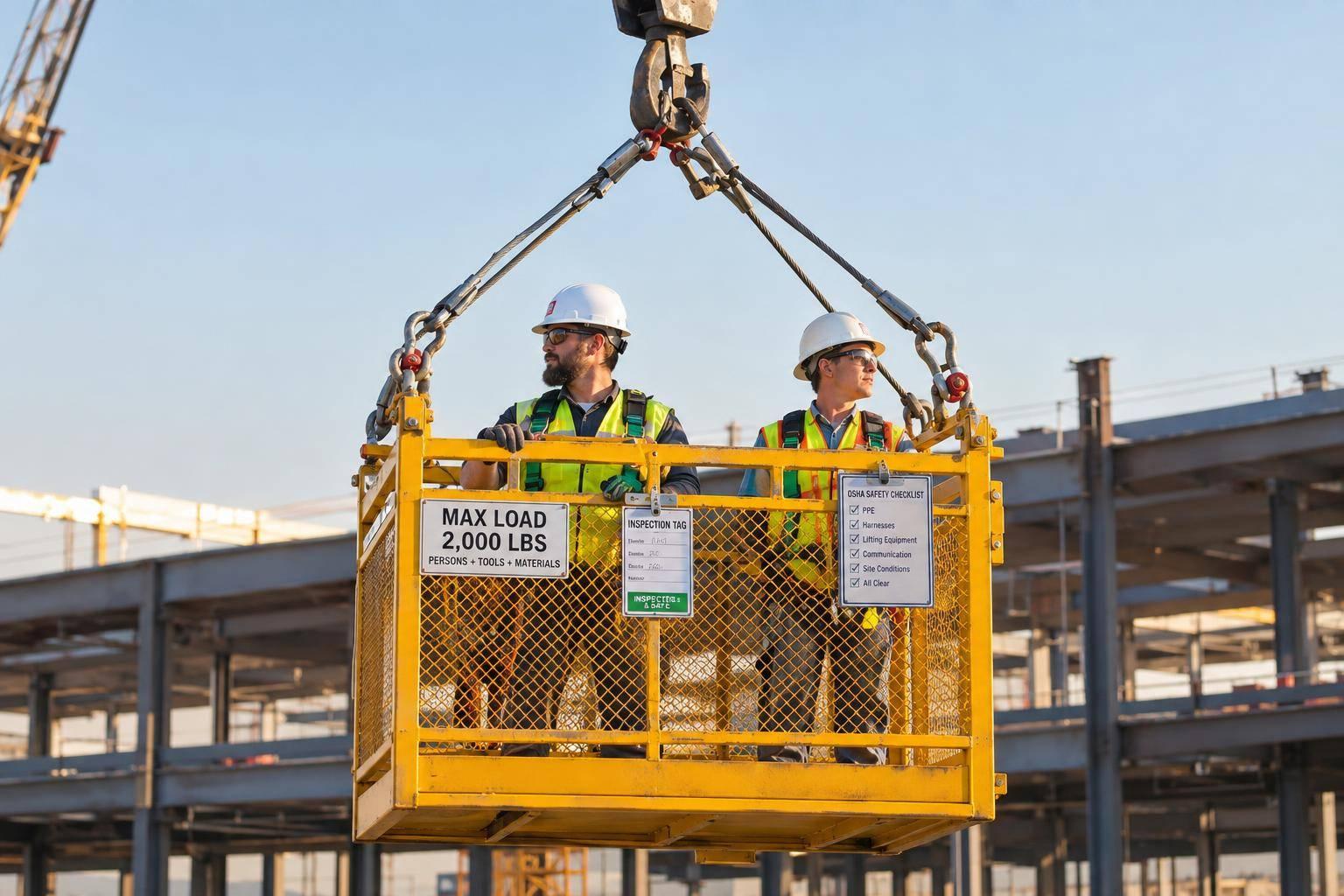
Man Basket Safety Standards: OSHA Guidelines
OSHA checklist for crane-hoisted man baskets: design, proof tests, trial lifts, fall protection, training, and rescue plans.