
OSHA Guidelines for Overhead Clearance in Crane Operations
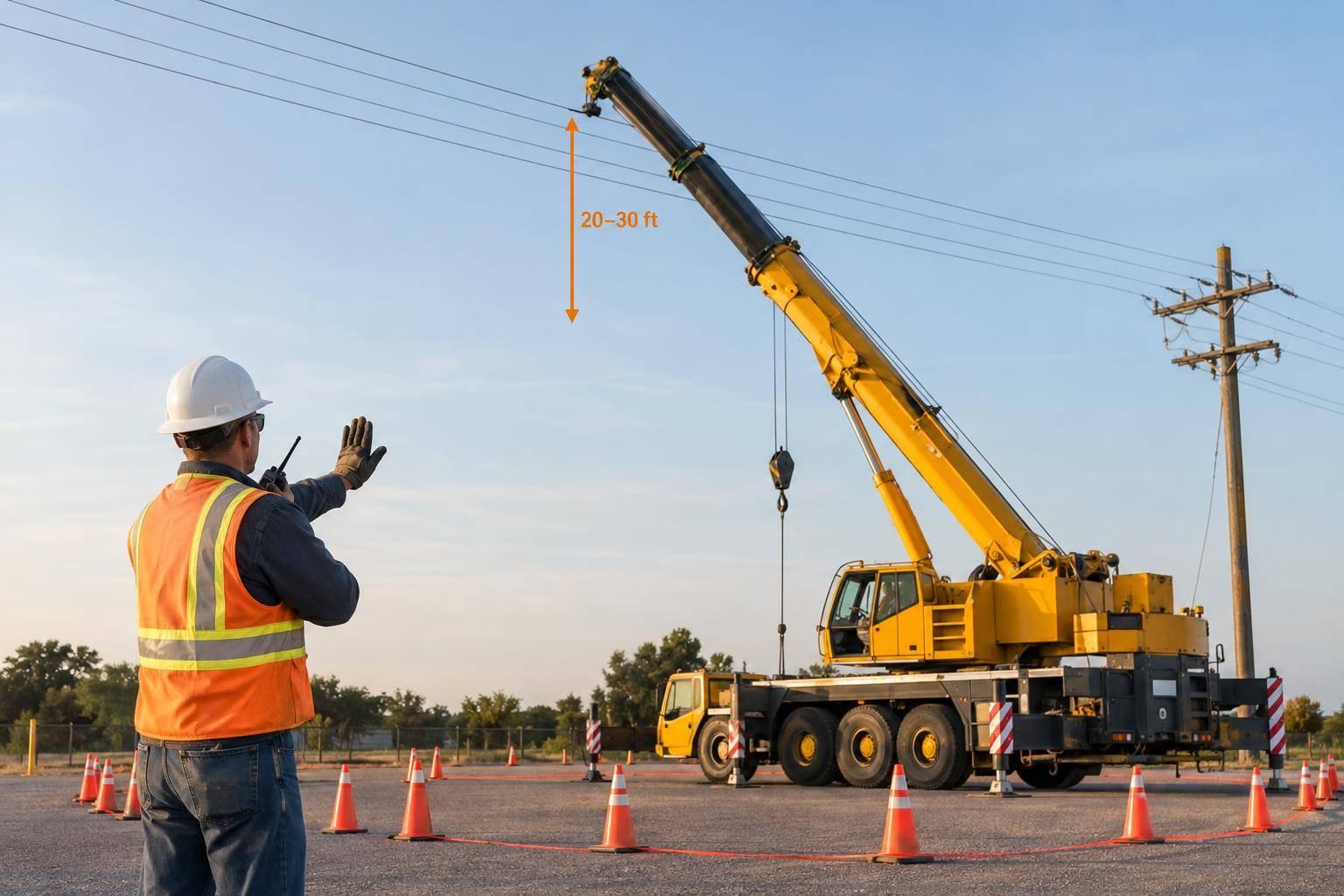
Before crane work starts, I check whether any part of the crane, rigging, or load could come within 20 feet of a power line - or 50 feet for lines above 350 kV. These are assessment thresholds, not one clearance distance for every job.
My approach is simple:
- Confirm line status and voltage with the utility, then select the clearance rule and required controls.
- Check separate rules for assembly, disassembly, and unloaded travel.
- Brief the crew, verify boundaries and communication, and plan for power-line contact.
- Stop and reassess when the load, weather, visibility, or site conditions change.
Spotters and warning devices do not permit closer work. Whether I’m planning with L&M Crane or another service, <u>hiring a crane does not transfer the employer’s OSHA duties</u>.
Crane Within 20 Feet of a Power Line: What Does OSHA Require?
sbb-itb-798c36f
Select the Correct Power-Line Clearance

OSHA Crane Power-Line Clearance Guide
Use the site survey to match each overhead line to the correct OSHA clearance rule. At the crane’s maximum working radius, check whether any part of the equipment, load line, load, or rigging could enter the required clearance.
Check the 20-Foot or 50-Foot Assessment Threshold
Under Section 1926.1408, assess whether any part of the crane system could come within 20 feet of lines up to 350 kV or 50 feet of lines above 350 kV. If it could, choose one of three options: de-energize and visibly ground the line, maintain the threshold distance with OSHA-specified controls, or confirm the voltage and determine clearance using Table A.
Use Confirmed Line Voltage to Apply Table A
Get the confirmed line voltage from the utility owner/operator before using Table A. The minimum clearances are:
| Confirmed line voltage | Minimum clearance |
|---|---|
| Up to 50 kV | 10 feet |
| Over 50 to 200 kV | 15 feet |
| Over 200 to 350 kV | 20 feet |
| Over 350 to 500 kV | 25 feet |
| Over 500 to 750 kV | 35 feet |
| Over 750 to 1,000 kV | 45 feet |
For voltages over 1,000 kV, the utility owner/operator or a registered professional engineer qualified in electrical power transmission and distribution must establish the clearance.
Check Separate Rules for Assembly, Disassembly, and Unloaded Travel
Assembly/disassembly and unloaded travel have separate rules. Section 1926.1407 prohibits assembly or disassembly within Table A distances unless the utility owner/operator confirms that the line is de-energized and visibly grounded at the worksite.
Section 1926.1411 and Table T apply to travel with no load and the boom or mast lowered. Use Table T before planning unloaded travel - not for lifts or loaded travel.
Put the required controls in place after setting the clearance distance and before any lift or travel.
Put Required Power-Line Controls in Place
Once the clearance distance is set, put site controls in place to match it. A spotter or warning device does not permit closer work. Insulating links and other accessories do not replace the required clearance either.
Coordinate Utility Work and Clearance Controls
Use the survey findings to select the control path and mark the work boundary. Match that path to the chosen clearance: de-energize and ground the line, maintain the 20-foot threshold with controls, or follow Table A with the required precautions.
Before work near energized lines, hold the required planning meeting with the operator and other workers involved. Review the clearance boundary and the measures that will prevent encroachment. Install the required flags, barricades, or other boundary markers. Add protections such as a dedicated spotter or range-limiting device, and use nonconductive tag lines whenever tag lines are needed.
Define the Dedicated Spotter’s Duties
A dedicated spotter is required when the operator cannot clearly see the boundary or lift area. Position the spotter where they can judge clearance using fixed reference points. Set up reliable, direct communication, such as radio, and give the spotter authority to stop movement before the minimum clearance is reached. Keep unrelated personnel outside controlled areas so the spotter can focus on the crane and line.
Meet Section 1926.1410 Before Working Within Table A Distances
Section 1926.1410 applies only when de-energizing and grounding the line or maintaining Table A clearance is not feasible. The employer must get the line’s voltage from the utility owner/operator to determine the correct Table A distance. The employer must also coordinate with the utility owner/operator, document the procedures and protective measures, and review them with the crew. Required protections can include dedicated spotting, elevated warning lines or barricades, range-limiting devices, and nonconductive tag lines.
Use these controls to verify the setup before the pre-lift check.
Verify Clearance Before and During Crane Work
Complete the Pre-Lift Check and Crew Briefing
Verify controls before every lift. The supervisor should confirm that the marked work zone still matches the crane’s maximum working radius. Recheck for lines, poles, guy wires, and hidden obstructions. Inspect the load path for overhead hazards, allowing for both boom and load movement.
Riggers should check the rigging and use nonconductive tag lines when needed. Confirm that the signal person is qualified and can communicate reliably. Assign one whenever the operator cannot see the boom, load, or travel path, or when restricted movement requires one.
Brief affected workers on who will serve as lift director and dedicated spotter. Review stop signals, emergency response, and the prohibited zone for the boom and load. Confirm line status or voltage with the utility before using the chosen clearance method.
Stop and Reassess When Conditions Change
Stop and recheck clearance whenever field conditions change. This includes failed communication, reduced visibility, wind that changes load movement, or boom deflection that threatens clearance. A new load, changed rigging, or an obstruction also calls for reassessment.
Resolve the problem, recheck clearance, and brief affected workers before restarting. Keep lift plans, survey logs, reassessments, signal-person qualifications, and utility confirmations on file.
Prepare for Contact With a Power Line
The employer’s response plan should assign one person to clear the area and notify the utility immediately. Keep everyone away from the crane, load, rigging, and surrounding ground. Ground current can injure people even if they never touch the equipment.
The operator should stay in the cab unless fire or another immediate hazard forces evacuation. If leaving is unavoidable, jump clear without touching the crane and ground at the same time. Land with feet together, then shuffle at least 20 feet away.
Do not restart until the utility has controlled the hazard and equipment and site checks are complete.
Conclusion: Confirm Clearance and Controls Before Work Begins
Overhead clearance is a final check before mobilization - not a one-time calculation. Before work starts, confirm overhead hazards, the clearance method, and controls for each phase: assembly, lifting, travel, and disassembly. Stop and reassess if site conditions change.
Coordinate with the utility before mobilization when de-energizing and grounding are under review. Apply the same planning approach to local project coordination.
Plan Local Crane and Rigging Work With L&M Crane
L&M Crane supports crane selection, access planning, and lift coordination for HVAC equipment, cell-site installations, and construction materials across Long Island, the five boroughs, the greater New York area, and New Jersey. Discuss tight access and site restrictions during planning so the equipment fits the site's limits.
Hiring a crane service does not transfer OSHA responsibility from the employer. Before work starts, clarify who will coordinate utility communication and site controls, clear the site, and confirm the controls.
FAQs
What if the utility cannot confirm the line voltage?
If the utility cannot confirm the line voltage, do not use OSHA Table A’s voltage-based clearance. Treat the line as energized and keep every part of the crane, load, and rigging at least 20 feet away. Alternatively, have the line de-energized and visibly grounded before lifting. Define the work zone, and keep the crane and load outside the prohibited boundary.
How do I account for power-line sag and sway?
Account for power-line sag and sway caused by wind or temperature changes in your site-specific lift plan. Check with the utility company to confirm the line voltage and how far the lines could move.
When mapping the load path, measure required clearance from the lines’ maximum possible sag or sway, not their position at rest. Keep all equipment, the load line, and the load outside this restricted zone for the entire lift.
Who verifies clearance when multiple employers share a site?
The Lift Director (or person in charge of the lift) coordinates the work and makes sure pre-job safety planning, the lift plan, exclusion zones, and stop-work authority are in place. This includes checking overhead-clearance controls throughout the lift.
Each employer remains responsible under OSHA for providing a safe workplace and confirming personnel qualifications, including those for operators and rigging personnel.
Related Blog Posts
Related Articles
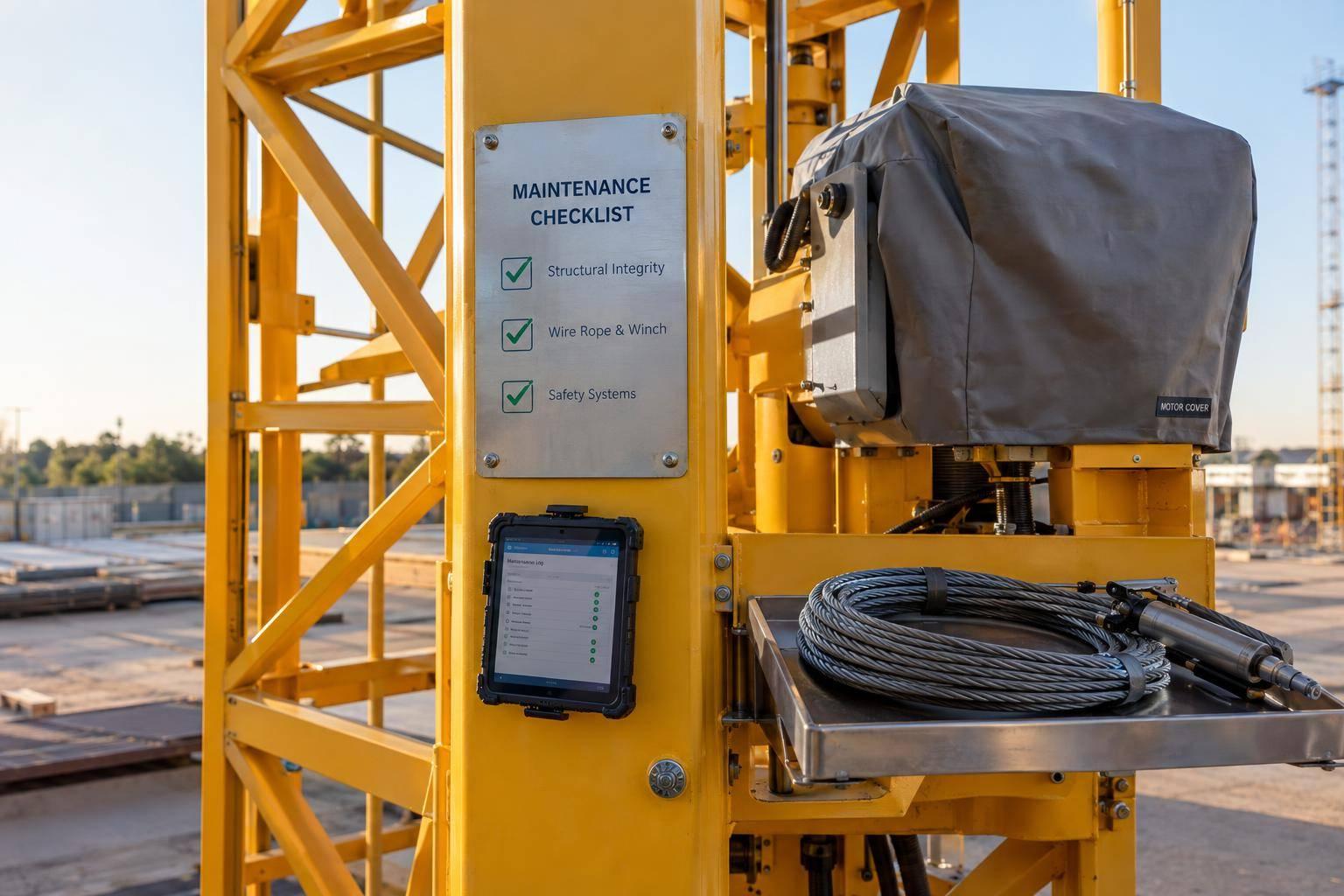
Checklist for Cost-Effective Crane Maintenance
Daily and scheduled inspections, lubrication, weather protection, and recordkeeping to reduce crane repairs, downtime, and maintenance costs.
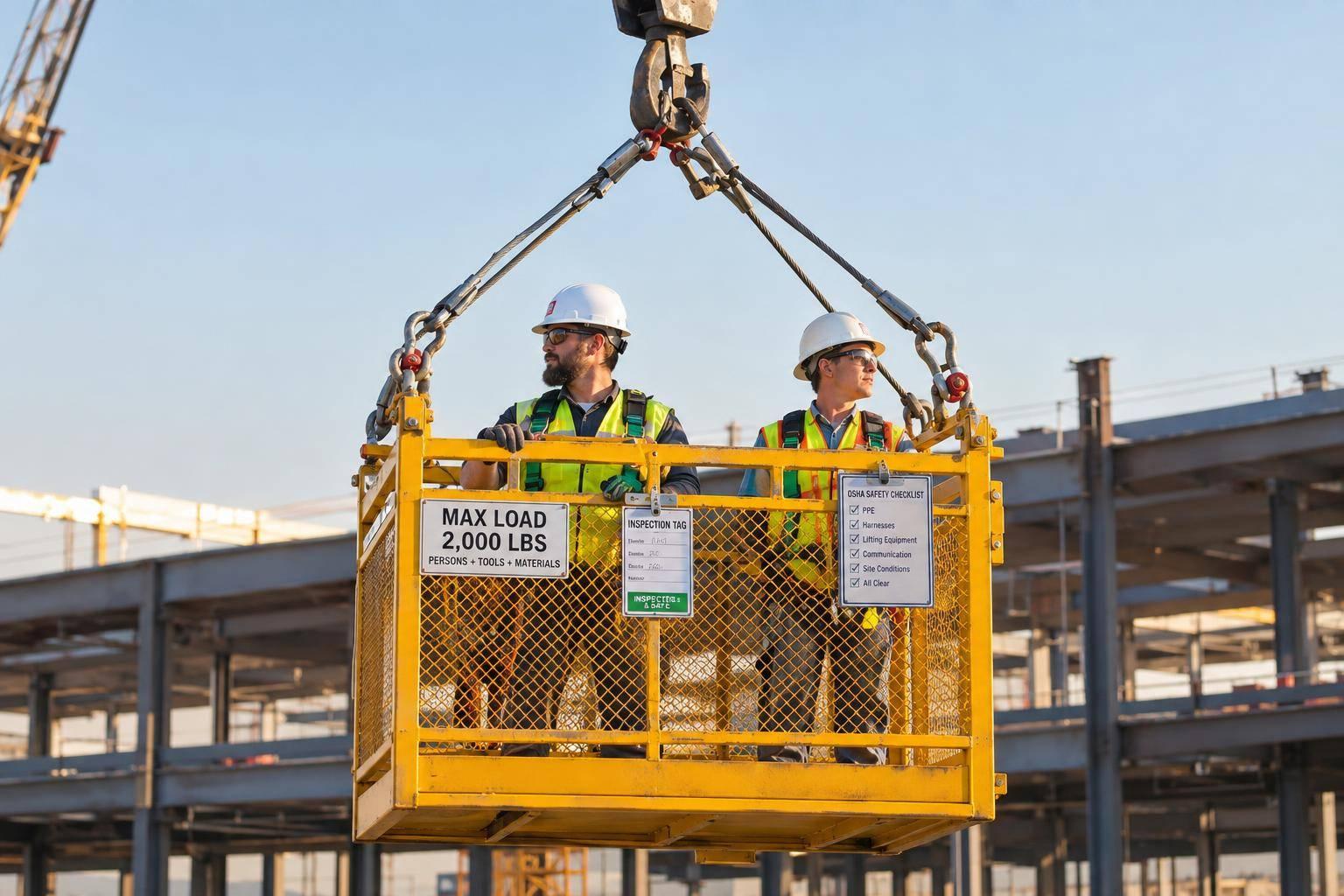
Man Basket Safety Standards: OSHA Guidelines
OSHA checklist for crane-hoisted man baskets: design, proof tests, trial lifts, fall protection, training, and rescue plans.
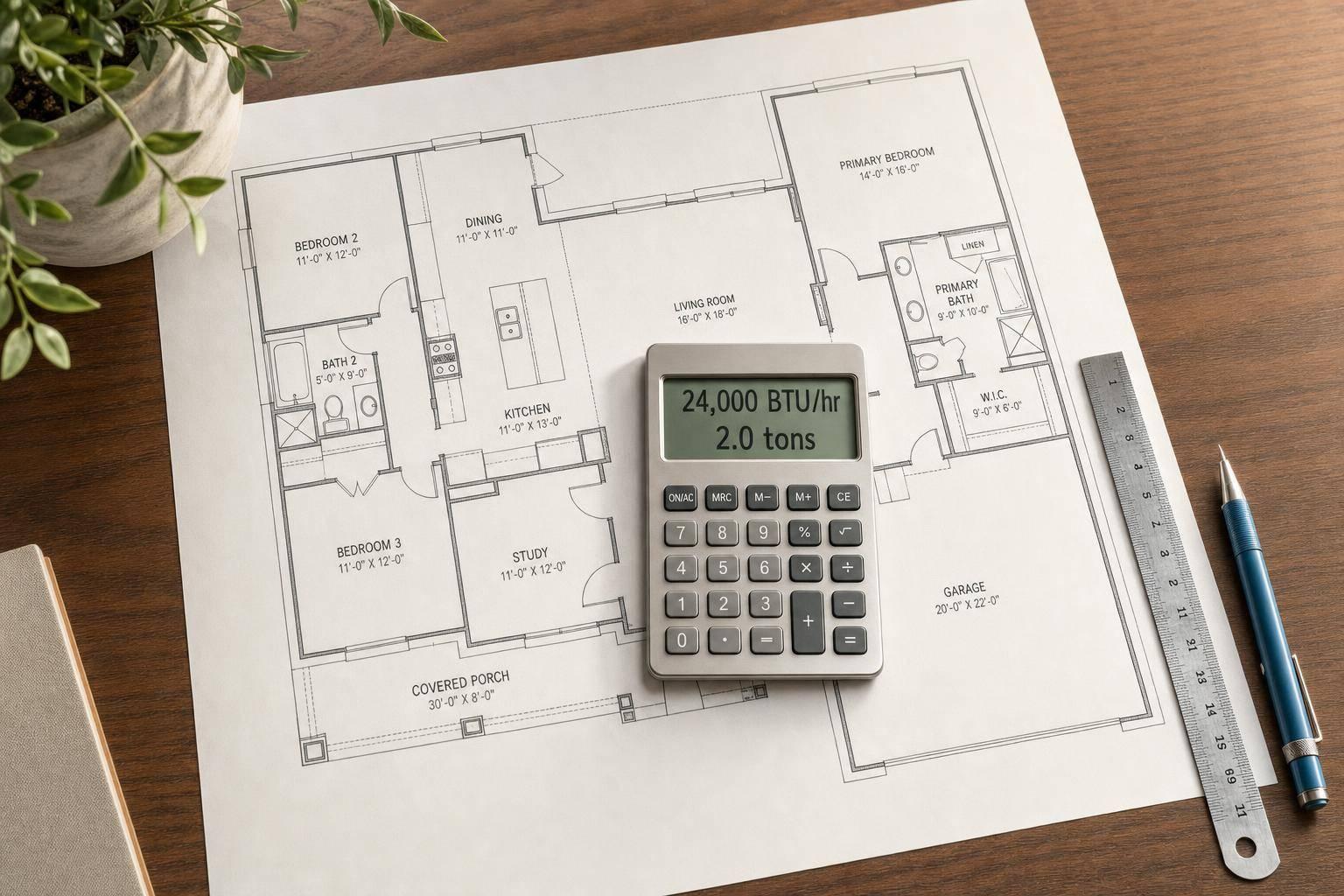
HVAC Tonnage Calculator
Estimate AC size in BTU/hr and tons using area, climate, insulation, and more—then compare your result with practical unit size ranges.