
HVAC Tonnage Calculator
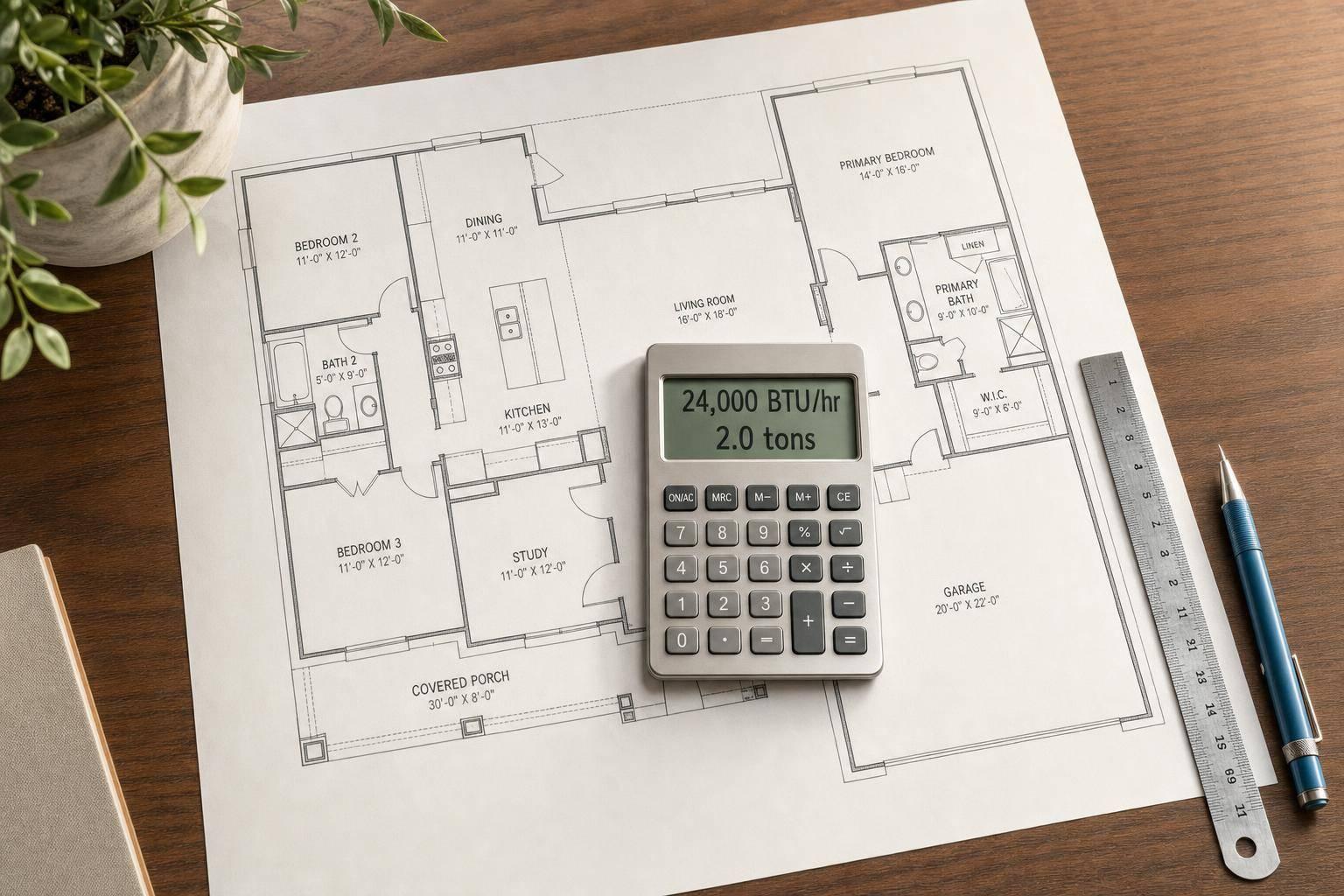
Estimate the Right AC Capacity for Your Space
A good HVAC tonnage calculator helps you get closer to the right air conditioner size before you start shopping or talking with installers. Instead of relying on square footage alone, this tool also considers climate, ceiling height, insulation, sun exposure, windows, occupancy, and added kitchen heat. That creates a more realistic estimate of cooling demand for a home, apartment, office, or small retail space.
What HVAC Tonnage Actually Means
HVAC tonnage is simply a way to describe cooling capacity. One ton of cooling equals 12,000 BTU/hr, so a 3-ton system provides roughly 36,000 BTU per hour. That number matters because an undersized system may struggle on hot days, while an oversized unit can cycle too often and leave humidity behind.
Why This Estimate Is Useful
This AC size calculator gives homeowners, landlords, and contractors a practical starting point for comparing equipment sizes and planning upgrades. It also shows a suggested range when your result sits between standard system sizes. Even with a strong estimate, final selection should be confirmed by a licensed HVAC professional using a full Manual J or equivalent load calculation. That extra step can prevent comfort issues, wasted energy, and expensive sizing mistakes.
FAQs
What does HVAC tonnage mean, and why doesn’t it refer to weight?
In air conditioning, tonnage measures cooling capacity, not how heavy the unit is. One ton of cooling equals 12,000 BTU per hour. So if a space needs 24,000 BTU/hr, that works out to about 2 tons of cooling. The term comes from the historical amount of heat needed to melt one ton of ice over a day, which is why it sounds a little odd if you’re hearing it in a modern HVAC context.
How accurate is an HVAC tonnage calculator for sizing an air conditioner?
A calculator like this gives a useful planning estimate, especially when you need a quick starting point for comparing equipment sizes. It looks at major sizing factors such as area, climate, ceiling height, insulation, windows, occupancy, and kitchen heat. Still, it can’t replace a full Manual J load calculation. Duct leakage, air infiltration, orientation, shading details, appliance loads, and local design temperatures can all change the final result. That’s why the estimate should be treated as a practical guide rather than the last word.
What should I do if my estimate falls between standard AC sizes?
That’s a common situation, and it’s exactly where careful review matters most. If the result lands between common sizes like 2.5 and 3 tons, don’t automatically jump to the next size up. Oversized systems can short cycle, reduce humidity control, and wear equipment faster. Before choosing, it’s smart to review insulation quality, window performance, ductwork condition, and airflow. A licensed HVAC professional can confirm whether the lower size is adequate or whether the next size makes sense based on a full load calculation and the actual system design.
Related Articles

Man Basket Safety Standards: OSHA Guidelines
OSHA checklist for crane-hoisted man baskets: design, proof tests, trial lifts, fall protection, training, and rescue plans.

Crane vs Boom Truck for HVAC Lifting
Compare boom trucks vs mobile cranes for rooftop HVAC lifts—weight, height, working radius, site access, permits, and true job cost.

Rigging Inspection Checklist
Run a fast pre-use rigging inspection, flag unsafe conditions, and get a clear pass or Do Not Use result for the jobsite.