When to Consider Truck Crane Rental for Your New York City Heavy Lifting Projects
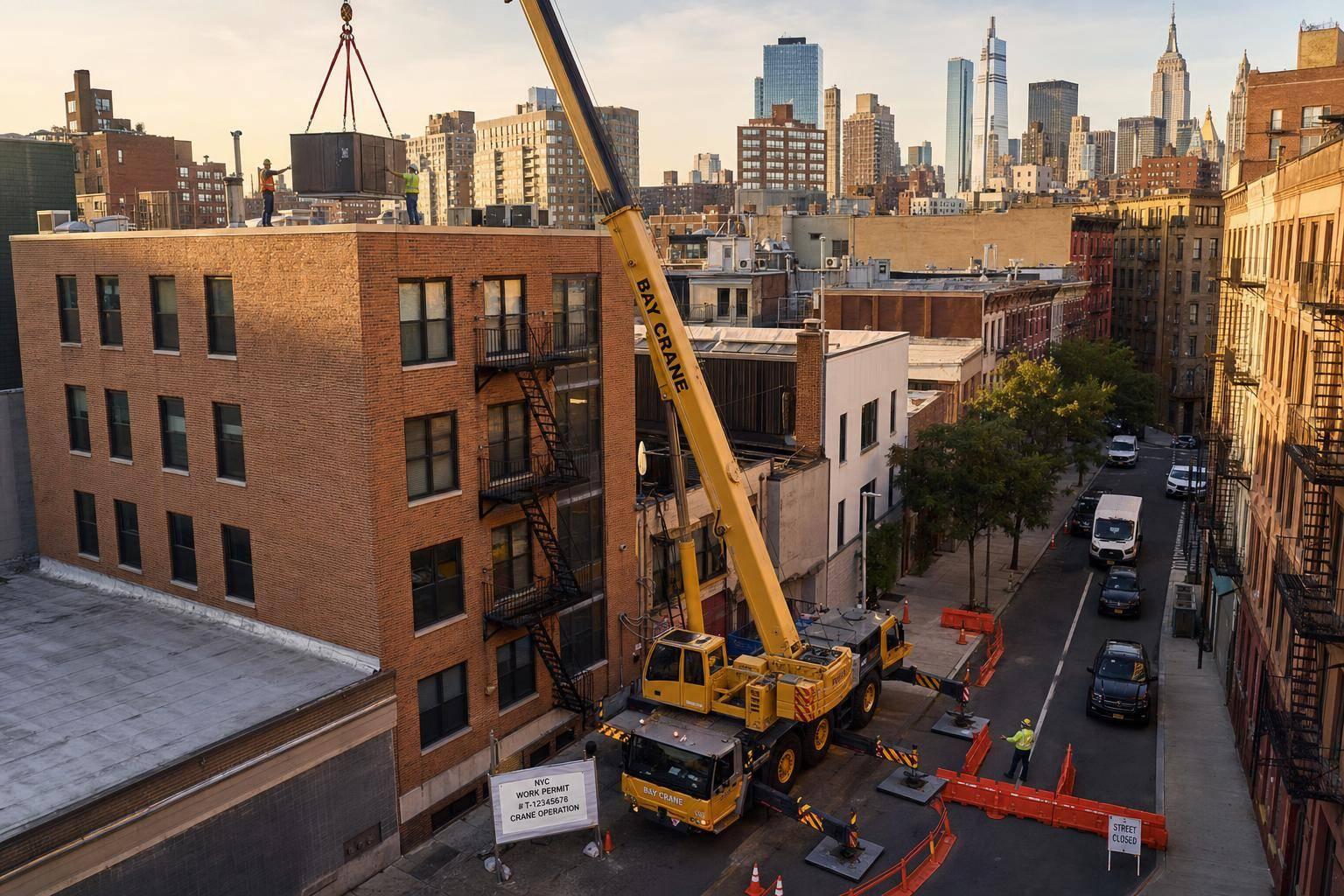
If your NYC lift can be done in one shift, from the street, and within the crane’s chart at the actual radius, a truck crane is often the right call.
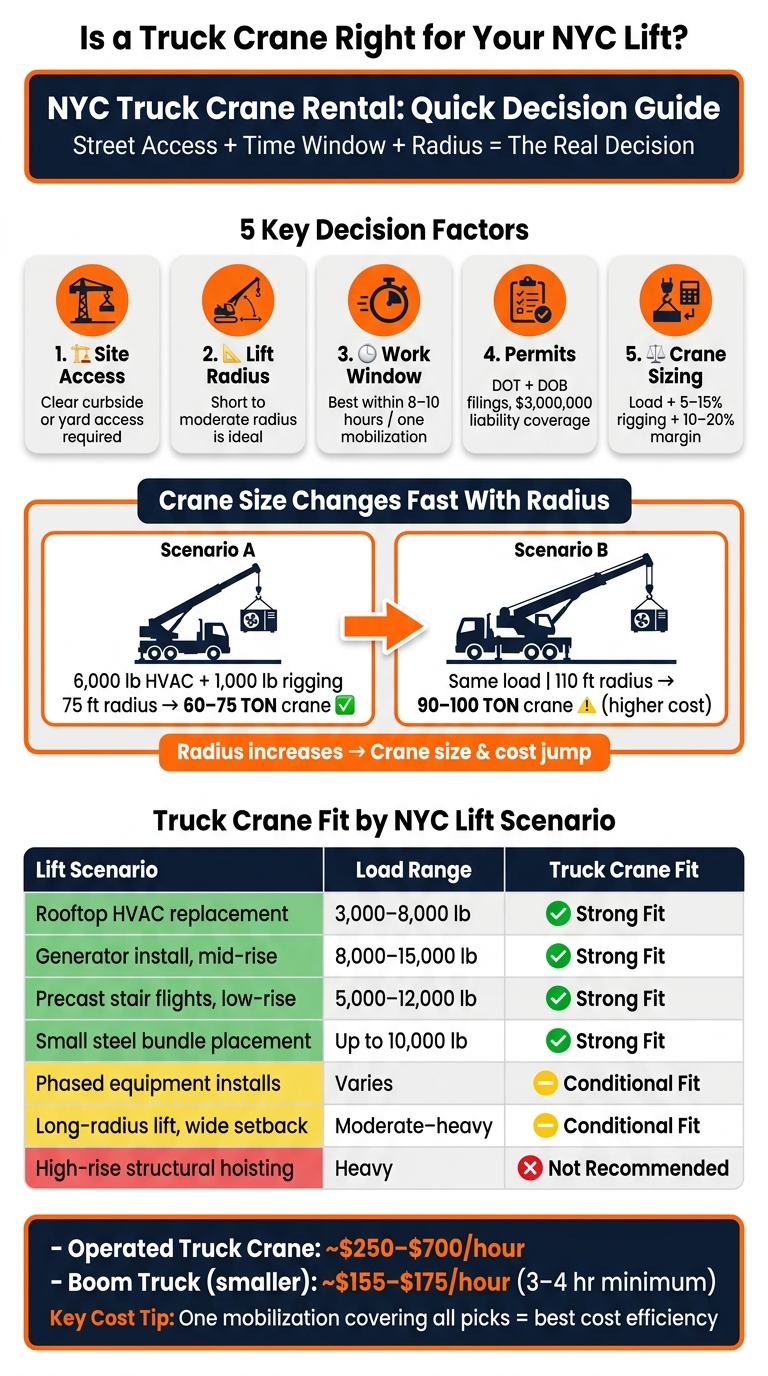
I’d look at five things first: site access, outrigger support, lift radius and height, permit needs, and whether all picks can be finished in one mobilization. In many cases, that’s what decides whether a truck crane stays cost-effective or whether a larger, longer setup makes more sense.
Here’s the short version:
- Best fit: rooftop HVAC units, generators, steel bundles, precast pieces, signs, antennas, and other short street-side picks
- Watch-outs: long radius, blocked curb lanes, vaulted sidewalks, overhead wires, bus routes, and phased installs spread across multiple weekends
- NYC rule checks: street occupancy permits, lane or sidewalk closures, DOB filings where required, and $3,000,000 liability coverage for crane street permits
- Cost trigger: truck cranes often make sense when the job fits inside 8–10 hours and avoids repeat mobilization
- Sizing rule: count the load, add 5%–15% for rigging, then leave about 10%–20% margin at the working radius
A simple example: a 6,000 lb HVAC unit plus 1,000 lb of rigging at a 75 ft radius may fit a 60–75 ton truck crane. Move that same pick to 110 ft, and the crane size - and price - can jump fast.
Quick comparison
- Lift Type: Mobile crane setups are well-suited for rooftop equipment, short steel or material picks, signs, and telecom work. High-rise structural hoisting generally requires a different crane configuration and more extensive planning.
- Site Access: Best suited for sites with clear curbside or yard access. Tight streets with little or no room for outriggers can make setup more difficult.
- Work Window: Most efficient when the required lifts can be completed in a single day or weekend. Multiple separate mobilizations can significantly increase project complexity.
- Working Radius: Ideal for short to moderate working radii. Long setbacks between the crane and building can reduce lifting capacity and require larger equipment.
- Street Impact: A straightforward setup may require only limited lane or sidewalk occupancy, while more complex lifts can require full street closures and extensive traffic control.
- Cost: Completing multiple picks during a single mobilization helps control costs. Repeated mobilizations and return trips can quickly increase the overall project expense.
So if you’re planning a lift in New York City, I’d treat truck crane rental as a street access + time window + radius decision first, and a tonnage decision second.
NYC Truck Crane Rental: Fit by Job Condition & Key Decision Factors
NYC Heavy-Lift Problems a Truck Crane Can Solve
HVAC Units, Rooftop Equipment, and Generator Placements
Contractors usually bring in a truck crane when the load simply can't go through the building. Rooftop RTUs, chillers, condensers, and generators are often too heavy or too bulky for elevators and stairwells, so lifting them from the street to the roof is often the most practical move.
HVAC units can weigh anywhere from a few hundred pounds to more than 3 tons. A truck crane can pick up the unit from the street and place it on the roof in one controlled lift. In NYC, these jobs are often set outside business hours to cut down on traffic disruption. That same fast setup also works well for steel, precast, and other time-sensitive picks.
Steel, Precast, and Material Handling for Low- and Mid-Rise Work
On low- and mid-rise jobs, truck cranes are often used for structural steel, precast panels, roof dunnage, and bulk materials when the site has street or yard access. One big reason they work so well is simple: they can reposition.
As erection moves across the building footprint, the crane can drive along the street or yard to stay within the best reach. That matters on crowded job sites where space is tight. It also helps with just-in-time deliveries. Instead of stacking rebar bundles, formwork, or dunnage steel on site, crews can lift those materials as they arrive.
Larger panels, heavier pieces, or longer reaches call for a bigger crane. And when the lift window gets even tighter, the same setup can handle one-day urban picks without dragging the job out.
Short-Duration Urban Lifts With Tight Work Windows
Signs, antennas, transformers, and small prefabricated assemblies have something in common: the work window is short, and the street needs to reopen fast. That's where a truck crane fits well.
Because the crane arrives ready to work, the street is tied up for less time. NYC contractors often schedule these lifts during off-peak hours or on weekends, while coordinating with DOT and local precincts to cut down lane closures and pedestrian detours.
A building sign installation or a rooftop antenna swap can often be finished in a few hours, with the crane gone before the block feels much disruption. That's why truck cranes are often a smart match for short urban lift windows.
Once the job type fits, the next step is figuring out whether the site can physically support the crane.
sbb-itb-798c36f
How to Check Whether Your Site Can Support a Truck Crane
Once the lift type makes sense, the next step is simple: make sure the site can actually handle the crane.
Street Access, Outrigger Space, and Ground Conditions
Start with a site walk. Measure the curb-lane length, curb-to-curb width, and sidewalk width. Those three measurements show whether the crane can set up without blocking fire lanes or building entrances. They also show whether the crane can stay inside the parking lane or spill into a travel lane.
In NYC, truck crane outriggers often extend past a standard parking lane. If the stabilizers reach into a travel lane, document the site carefully. Use dimensioned sketches and photos taken during active traffic periods so the crane planner can make a precise call.
Ground conditions matter just as much. Vaulted sidewalks, basements under the sidewalk or curb lane, and utility trenches may not safely handle concentrated outrigger loads. If there's any doubt, bring in a structural or geotechnical engineer to confirm allowable bearing pressures before the crane shows up. Timber mats or steel spreader plates are often used to solve the problem, but they should be sized from load calculations - not from habit.
Lift Radius, Building Height, and Site Obstructions
If the street can support the crane, check the lift geometry next.
Lift radius is the distance from the crane's center to the load at both the pick point and the set point. Measure it from the actual crane location on a scaled site plan.
Building height should be measured from the crane's setup elevation to the top of whatever the boom must clear, such as parapets, penthouse walls, scaffolding, or netting. That geometry drives boom length, boom angle, and actual rated capacity. And this is where many jobs get tighter than expected. Capacity at long reach is often much lower than the crane's headline rating, so this step isn't optional.
Mark every overhead obstruction on both a plan view and an elevation view, including:
- Sidewalk sheds
- Adjacent buildings
- Overhead power lines
- Telecom cables
- Streetlights
Any one of these can limit boom angles or restrict rotation. OSHA and local rules set minimum clearance distances from energized lines based on voltage, and NYC utilities may require planned outages for high-risk lifts. Share all of this with the crane planner before you choose a crane.
NYC Permits, Street Closures, and Traffic Coordination
In NYC, truck crane work usually involves both the Department of Buildings (DOB) and the Department of Transportation (DOT). DOB may require crane filings and engineered lift plans, especially for larger cranes or lifts near occupied structures. DOT controls street and sidewalk occupancy through Street Occupancy Permits that spell out dates, times, lane closures, and parking suspensions.
NYC rules also put firm limits on how much roadway a crane can take up. A crane can't occupy more than one-third of the roadway width unless a street-closing permit allows it, and the crane's outer limit must stay at least 12 ft from the opposite curb. On the sidewalk side, if you can't keep at least 5 ft of clear pedestrian passage, you need a full sidewalk closing permit. Those cutoffs often decide whether the job can run with a parking lane permit or needs a full street closure and a detailed traffic control plan.
Permit needs grow with crane size and street impact. Jobs near bus routes, bike lanes, or major arterials often come with tighter work windows or added traffic control rules. NYC DOT also requires $3,000,000 combined single limit general liability coverage for any permit that places a crane on a street.
Once the site and permit path are clear, the next move is to match crane size and rental length to the lift.
Capacity, Project Duration, and Cost: When Truck Crane Rental Makes Financial Sense
Matching Load Weight and Lift Duration to the Right Crane Size
After access and permits are sorted out, the next step is simple: can the crane handle the lift within the rental window?
To size a crane the right way, focus on four things:
- equipment weight
- rigging weight
- lift radius
- lift height
Rigging often adds 5%–15% to the load, so it needs to be part of the total. Then check the load chart to find the minimum capacity at the actual radius and boom length. It’s also smart to leave a 10%–20% cushion above the total lifted weight.
Here’s how that plays out on a job site. A 6,000 lb rooftop HVAC unit with 1,000 lb of rigging at a 75 ft radius and 120 ft tip height may fit a 60–75 ton truck crane. Push that same lift out to a 110 ft radius, and the job may need a 90–100 ton crane.
That change matters. A lift can look fine on paper until the radius stretches. And once that happens, crane size and price can jump fast.
For timing, a typical HVAC lift in NYC often breaks down like this: 2 hours for crane setup, 4 hours of lifting across 6–10 picks, and 2 hours for demobilization. That keeps the work inside a single 8–10 hour window. When all picks get done in one mobilization, that’s usually where the cost edge comes from.
If the crane has the capacity, the next issue is cost: does a short rental beat a longer setup?
When a Truck Crane Costs Less Than a Larger Setup
NYC truck crane cost usually includes mobilization, crane and operator time, rigging, permits, and traffic control. Operated truck cranes run about $250–$700 per hour, while smaller boom trucks are often closer to $155–$175 per hour with a 3–4 hour minimum. In many cases, that comes in below the price of a week-long crane setup.
Truck crane rental tends to make more financial sense when:
- the building height and needed radius stay within standard reach
- the street allows quick setup and teardown
- the lift finishes in one day or one weekend
That’s the sweet spot. Short job, one mobilization, done.
The math changes when work is split up. Multiple mobilizations for phased installs can add up fast. If two equipment installs are scheduled weeks apart, the total mobilization cost can start to look a lot like the price of a longer-term option. If those lifts happen close together, though, truck crane rental can still work well when one mobilization covers both jobs.
Truck Crane Fit by Job Condition
Use the quick reference below to match common NYC lift conditions to truck crane fit.
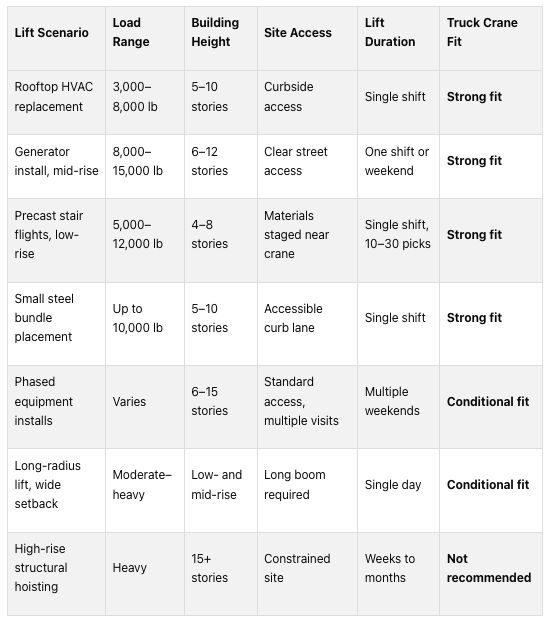 Conditional fit means a truck crane may still work, but the cost edge gets smaller. Check the load chart at the actual radius, then compare the full mobilization cost if the job needs more than one visit.
If the job falls into the conditional range, use the checklist in the conclusion before booking.
Conclusion: A Simple Checklist for Deciding on Truck Crane Rental
Key Checks to Run Before Scheduling a Truck Crane
If the job falls into that middle ground, pause and run this checklist before you book. These four checks will tell you if a truck crane makes sense for the lift.
Site and access
- Paved access with enough room to set up and swing
- Enough surface capacity for outriggers, mats, or cribbing
- No major overhead obstructions in the boom path
Load and lift geometry
- Exact load weight and dimensions confirmed
- Match the load, radius, and height to the load chart
- Verify capacity at the actual radius and height
Then move to the street and permit side of the job.
Permits and traffic
- NYC DOT construction activity permit secured when required
- Street, lane, or sidewalk closure coordinated with DOT if setup requires closing lane or sidewalk space
- Engineered drawings ready if the building size or location triggers that requirement
Last, make sure the timing works for a one-shot setup.
Work window
- Complete all picks in one mobilization
If every box is checked, truck crane rental is likely a good fit. If a few items throw up warning signs, the job may call for a different setup or more lead time for approvals. A crane partner can line up the crane, rigging, and permit plan with the job.
FAQs
How far in advance should I book a truck crane in NYC?
Book a truck crane in New York City as early as possible. Standard permits often take 5 to 20 business days. Emergency permits may move in 24 to 48 hours if you have the right justification.
Timing can also shift based on site surveys, engineered drawings, and traffic coordination. That’s why early scheduling matters. It helps you avoid delays and gives you a better shot at getting the equipment you need when you need it.
What site details should I gather before requesting a quote?
For an accurate quote, pull together the main details about the project, jobsite, and load.
That usually means:
- Zip code
- Job description
- Project duration
- Tentative start date
- Total load weight, including rigging
- Required lift radius and height
- Site limits, such as ground stability, access, overhead obstacles, and traffic
- Any site plans, permit needs, or engineered drawings
The more exact these details are, the easier it is to price the job properly and avoid surprises once work begins.
When does a truck crane stop being the most cost-effective choice?
A truck crane usually stops being the lowest-cost option when the lift pushes past what makes sense for NYC conditions or becomes critical, which brings added engineering review and approvals.
That often happens when a lift gets close to or above about 75% of rated capacity, or when the job includes high-risk factors and extra planning. In New York City, that can mean tight access, overhead obstructions, street and traffic limits, and permit timelines that drag things out and lead to delays.
Related Blog Posts
Related Articles
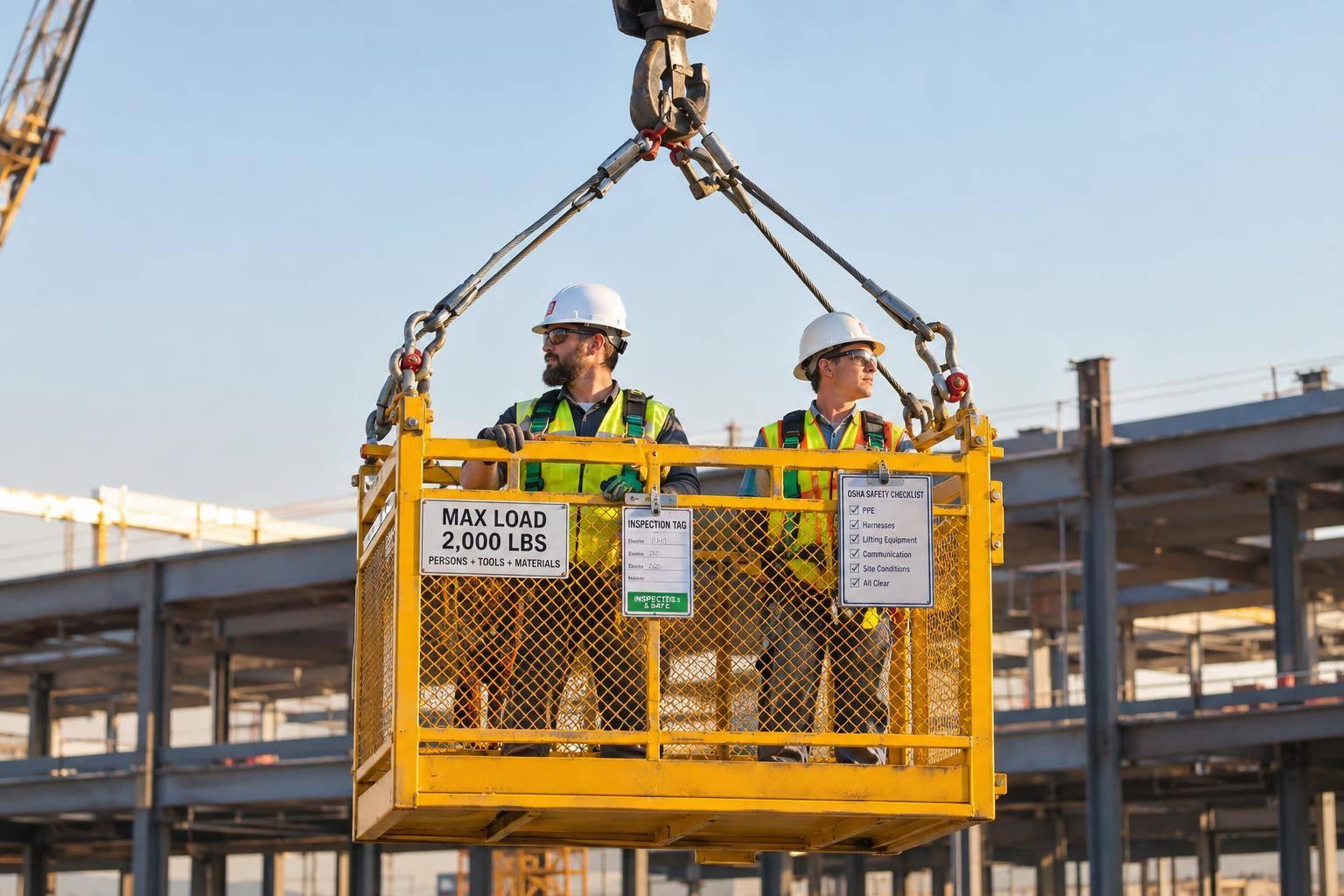
Man Basket Safety Standards: OSHA Guidelines
OSHA checklist for crane-hoisted man baskets: design, proof tests, trial lifts, fall protection, training, and rescue plans.
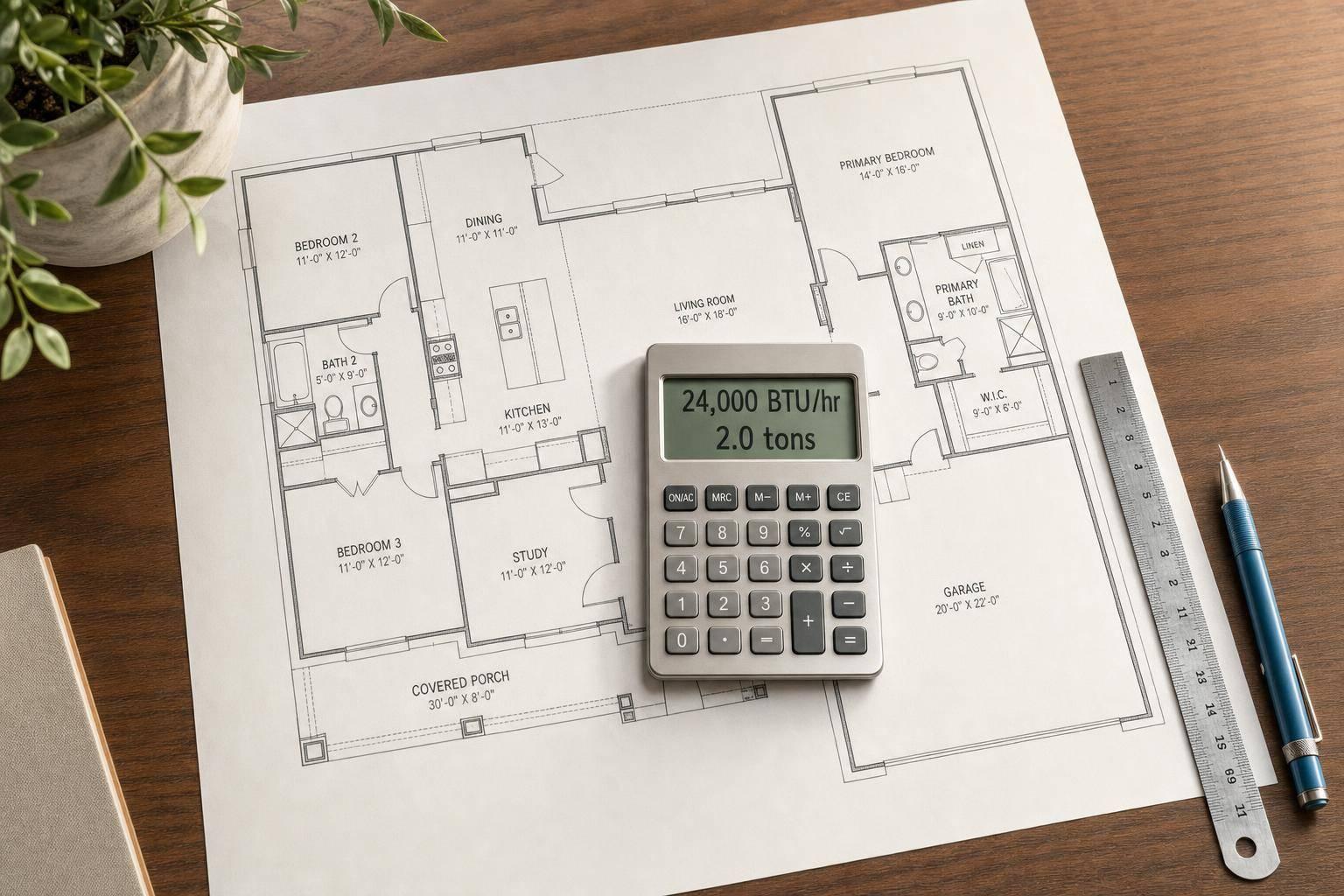
HVAC Tonnage Calculator
Estimate AC size in BTU/hr and tons using area, climate, insulation, and more—then compare your result with practical unit size ranges.
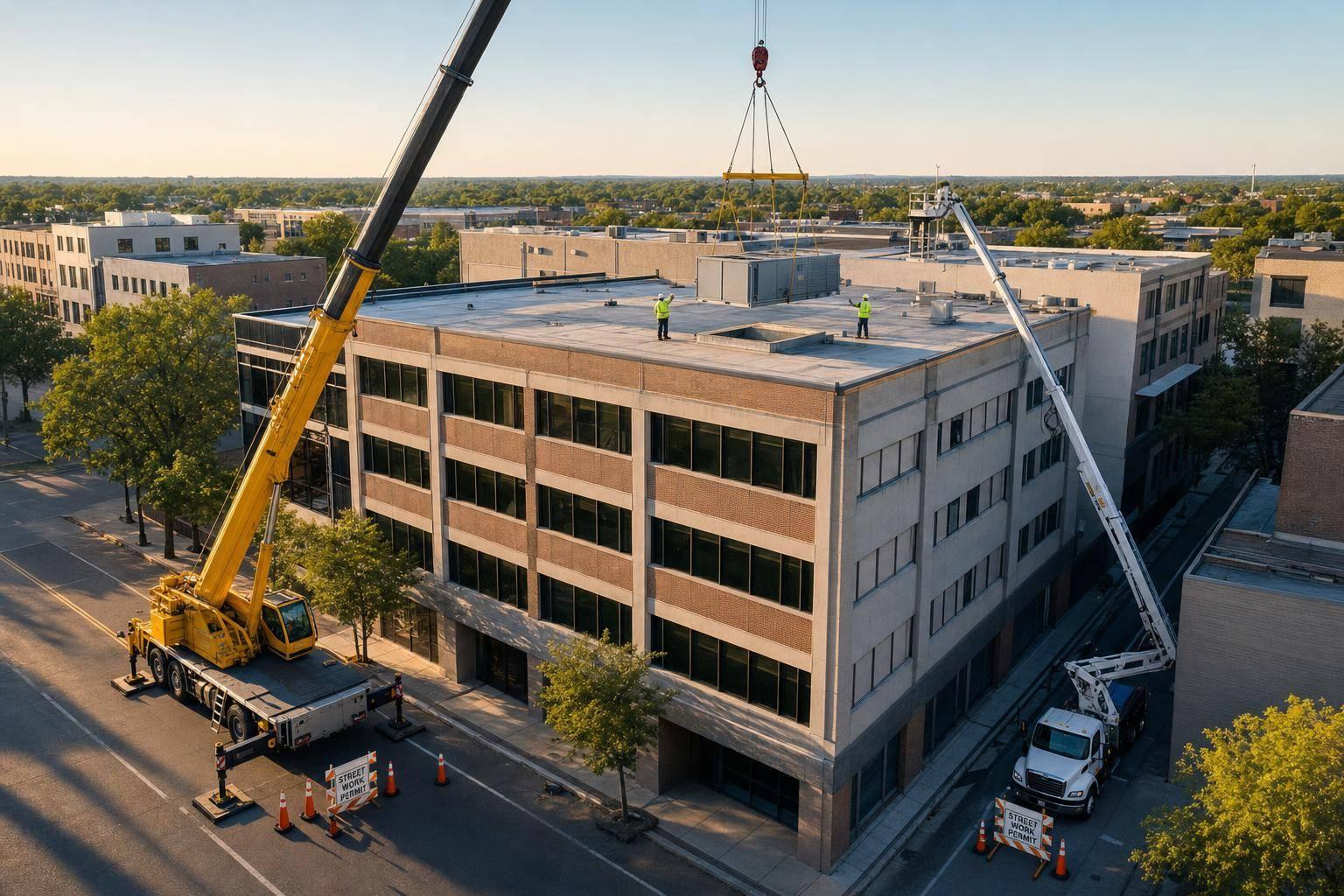
Crane vs Boom Truck for HVAC Lifting
Compare boom trucks vs mobile cranes for rooftop HVAC lifts—weight, height, working radius, site access, permits, and true job cost.